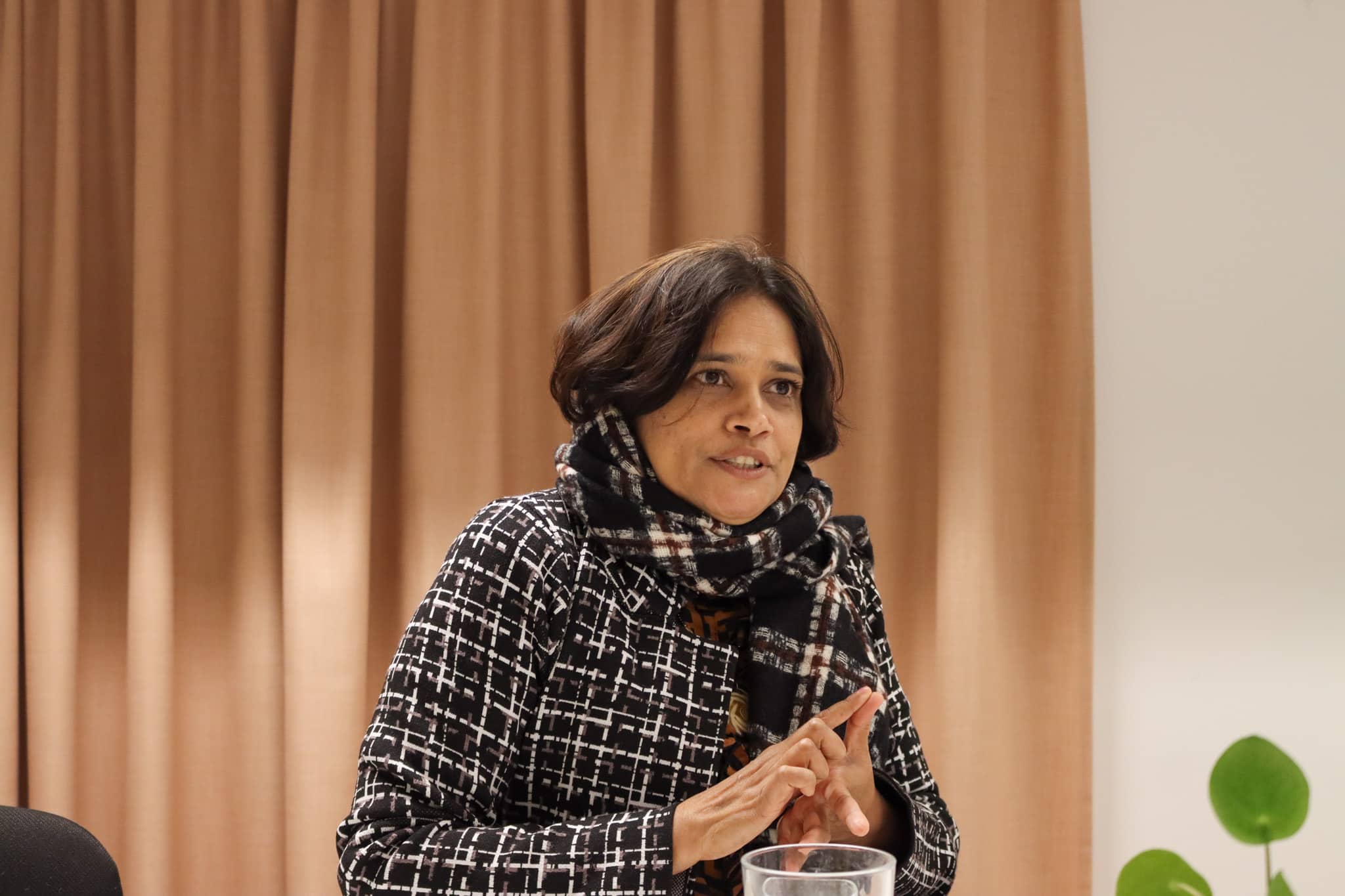
Nazma Akter talks to Swedwatch about her fight for women workers’ rights
Across the globe, courageous women human rights defenders are tirelessly working to create a world that is more equitable and just. They confront patriarchy, discrimination and inequality that have for centuries overshadowed the lives of many women and girls. One of these women is Nazma Akter, a well-known labor rights defender from Bangladesh. During a recent visit to Sweden, she talked to Swedwatch about her fight.
Nazma Akter started working in a factory in the garment sector when she was 11 years old. She is now the president of Sommilito Garment Sramik Federation, one of the biggest unions in Bangladesh, organizing women workers in the garment sector. She is also the founder of the Awaj foundation, promoting workers’ welfare.
“I have been fighting for workers’ rights and especially women workers’ rights in my country for 35 years. In Bangladesh, women activists face many challenges in our patriarchal society. When you work for women workers’ rights you fight against the state, the company and often your own family.”
Sexual harassment and gender violence are some of the key issues for women workers in the garment sector according to Nazma Akter. Raising your voice often comes with a high price. Labour rights activists are often under threat and face many challenges. Many activists have been blacklisted, lost their jobs or faced legal charges.
“Women should be quiet and raising your voice make people think you are not decent. When I was 14 years and started organising, my neighborhood thought I was a sex worker, I was out early in the morning and late in the night. It was very challenging, they thought I was a “bad women” and didn’t know how to behave. It’s not an easy task. When you are also very poor there is also the class-issue, people can treat you badly without any consequences.”
The garment sector mainly consists of women workers. In her meetings with companies Nazma Akter particularly highlights the challenges of women workers who often work far from home, such as lack of childcare, as well as the lack of living wages and lack of decent housing.
The poor living conditions and long working hours make women sick, and they need to retire very early because their bodies can’t take anymore.
“This needs to change so we get more of a power balance between workers and employers. Accountability and transparency in global supply chains need to increase. Better purchasing practices, freedom of association, collective bargaining and improved working and living conditions are some thing companies need to ensure.”
During her visit in Sweden Nazma Akter has met with Swedish companies, the Ministry of Foreign Affairs and Swedish civil society. Business coalitions like Ethical Trading Initative (ETI), amfori and ACT, where many European brands including Lindex, Kappahl and H&M, are members, have expressed their support for a living wage and to union demands to strengthen collective bargaining.
However, even if several brands have expressed support to living wages through their membership in associations, most of them – H&M included – have remained hesitant to publicly support trade unions demands to increase the minimum wage to 23,000 taka.
The past weeks in Bangladesh have been marked by demonstrations as workers have protested against the minimum wage which was set at 12500 taka. Brutal violence and threats by police and factory owners have been reported. Thousands of people have been arrested during the protests and several people has died.
When you work for women workers’ rights you fight against the state, the company and often your own family.

Nazma Akter taking part in recent demonstrations for a raised minimum wage for textile workers in the ready-made garment sector in Bangladesh. Workers demand an increase from the current monthly minimum wage of 8,000 taka, to at least 23,000 taka (roughly 198 Euros).
