PUTTING COMMUNITIES AT THE CENTRE OF REMEDY
A guidance note on how community-driven grievance mechanisms can strengthen access to remedy, and how faith actors can play an enabling role.
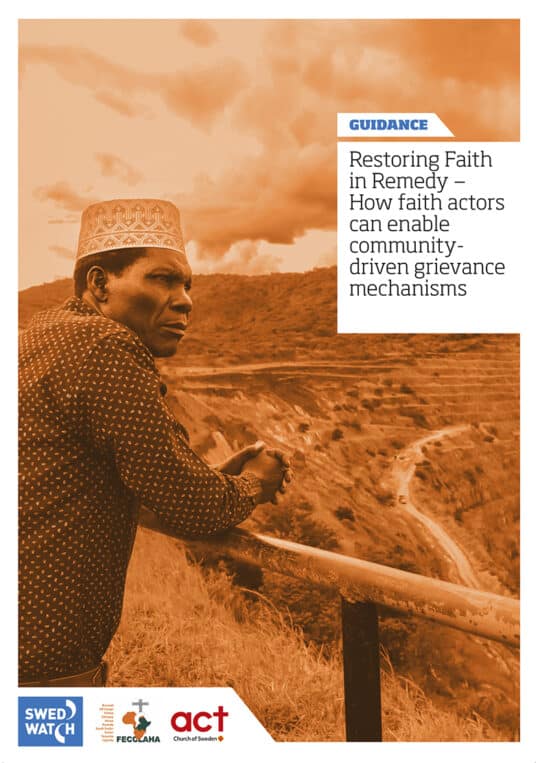
Developed through collaboration with mining-affected communities and faith leaders in the Great Lakes and Horn of Africa, the guidance note “Restoring Faith in Remedy” provides a practical framework for community-driven grievance mechanisms and recommendations for actors across extractive value chains.
With Africa holding more than 30 percent of the world’s critical mineral reserves, the continent is experiencing a surge in investment in mineral extraction. While this presents significant economic opportunities, it also brings substantial risks for communities living near extractive operations.
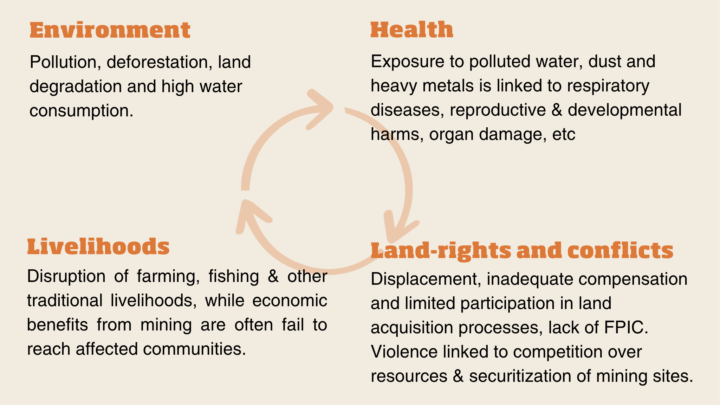
In the Great Lakes and Horn of Africa – a cornerstone of the global minerals supply, and extracting including cobalt, tin and gold – many communities continue to bear the costs of mining. Communities living near mining operations report severe environmental pollution, health impacts, land disputes, violence, and loss of livelihoods. These impacts are often interconnected, reinforcing and compounding one another.
🌍 Environmental impacts: Pollution, deforestation, land degradation and high water consumption.
👨🏽⚕️ Health impacts: Exposure to polluted water, dust and heavy metals is linked to respiratory diseases, reproductive & developmental harms, organ damage, etc.
💰 Economic impacts: Disruption of farming, fishing and other traditional livelihoods, while economic benefits from mining are often fail to reach affected communities.
⚠️ Land rights & conflict: Displacement, inadequate compensation and limited participation in land acquisition processes, lack of prior and informed consent (FPIC).
Exisiting grievance mechanisms are flawed
While the impacts illustrated above are far-reaching, access to justice and remedy remains limited. Access to effective grievance mechanisms, both at site level (OMGs) and across the value chain, is often inadequate. Existing mechanisms are frequently inaccessible, poorly communicated, suffer from slow, opaque and abusive procedures, and are characterised by low levels of trust, further exacerbating existing harms and contributing to a persistent access-to-remedy gap.
The access-to-remedy gap
Harm occurs ➡️ Grievance mechanism exists ➡️ Communities cannot access it ➡️ Conflict & harm escalates
Common barriers to access:
- Lack of awareness & accessible information.
- Opaque, slow & abusive procedures.
- Feeling unsafe using grievance mechanisms.
- Poor protection measures.
- Lack of trust in designated representatives.
- Civic space restrictions suppress investigations and efforts to address grievances
Drawing on the experiences and priorities of affected communities, the guidance note “Restoring Faith in Remedy” outlines how effective, community-driven grievance mechanisms can be designed and what companies, investors and states must do to support meaningful access to remedy.
“Communities living with the impacts of extractive industries are too often left without meaningful avenues to raise grievances or seek remedy. This guidance shows that solutions exist — but they require coordinated action from all actors across the value chain”, says Benjamin Claeson, Programme Officer at Swedwatch and author of the report.
Faith actors can bridge the gap between remedy and communities
The guidance highlights the unique role faith actors can play in improving access to justice. As trusted institutions with deep roots in affected communities, they are often the first place people turn when facing harms linked to extractive industries. Their long-term presence, strong advocacy platforms, and ability to facilitate dialogue and reconciliation position them as important bridges between communities and grievance processes.
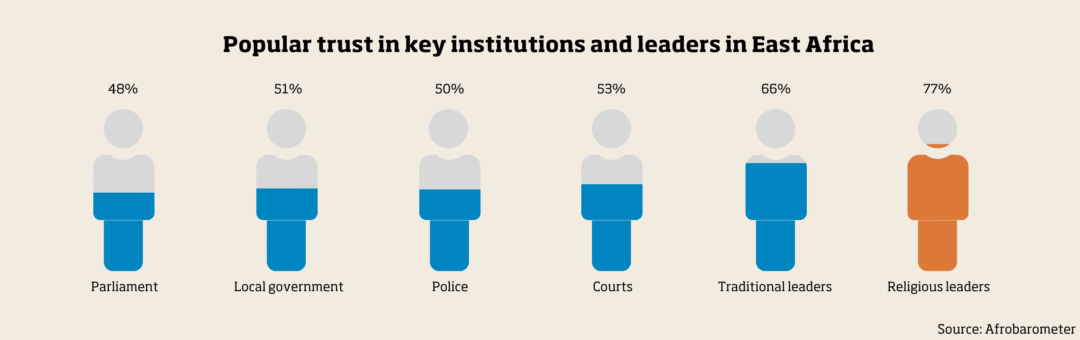
“Church leaders can talk to the government, it is the only institution left who can challenge the government. The government respects the church. Communities see the church as the only institution that can be their voice. Even those who take up arms respect the church.” /Quote from the guidance note.
Below is a summary of the factors that communities identified as essential for successful community-driven grievance mechanisms, along with the role of faith actors in supporting them. This is followed by recommendations for how value chain actors can strengthen access to remedy. Full details of the design factors and the recommendations can be found in the guidance note.
Design factors for community-driven grievance mechanisms
Drawing on the experiences of faith leaders and community members, the report identifies a set of design factors for community-driven grievance mechanisms, with a focus on site-specific OGMs. Below are a selection of specific recommendations which inform how to implement the factors identified. For the detailed version, click here.
Prior to Submission
✅ Partner with diverse local actors to raise awareness. Faith actors can help reach wider audiences and communicate information in accessible ways.
🚫 Do not rely solely on digital platforms, foreign languages, or formal channels for outreach.
✅ Offer multiple submission channels, including toll-free hotlines and independent community-based entities.
✅ Support community-led documentation of impacts and provide trusted spaces for identifying grievances.
✅ Ensure submission options are accessible to illiterate community members and available in local languages.
✅ Protect complainants through confidentiality measures, anonymous reporting options, and zero-tolerance policies for retaliation.
✅ Use trusted community spaces, including places of worship, as safe venues for dialogue and grievance submission.
🚫 Do not assume policies alone ensure protection; monitor risks and safeguards continuously.
After Submission
✅ Prioritise claims, where necessary, in consultation with trusted community representatives.
🚫 Do not assess complaints solely against certification-related criteria.
✅ Consider independent multi-stakeholder review panels. External faith leaders may contribute impartial oversight.
✅ Be transparent about governance, staffing, and grievance-handling processes.
✅ Ensure reviewers have the resources and independence needed for impartial investigations.
🚫 Do not involve personnel who may be subject to, or implicated in, a complaint.
✅ Include binding enforcement provisions and clear consequences for non-compliance.
How value chain actors can support access to remedy
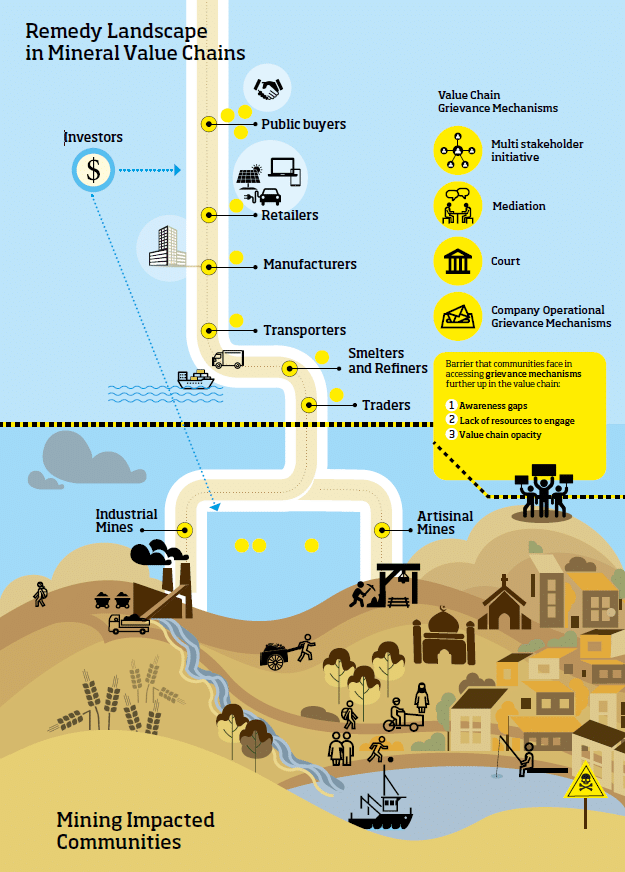
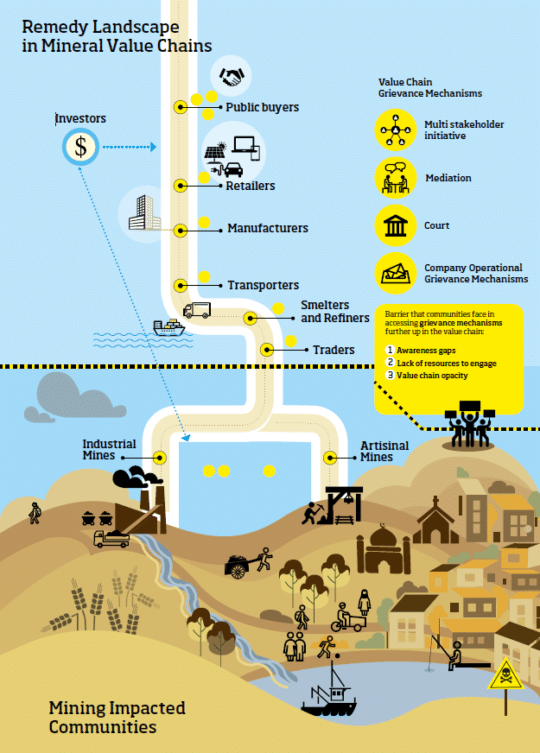
The guidance note includes recommendations for actors across extractive value chains (see figure 1) on how to strengthen access to remedy and support community-driven grievance mechanisms. It highlights that effective remedy requires coordinated value chain action and not just at the mine site.
Actors linked to impacts, including downstream manufacturers, consumer companies, investors and public procurers, should use their leverage to:
- Set clear expectations on stakeholder engagement and remedy.
- Engage directly with communities and faith actors.
- Strengthen value chain transparency.
- Take a zero-tolerance approach to violence and intimidation.
Actors that have contributed to impacts, including investors in mining companies, equipment providers and refiners, should:
- Use collective leverage to support access to remedy.
- Support independent, community-based monitoring.
- Ensure community-informed plans for mine closure and long-term impacts.
Download the guidance note
Methodology: This guidance note is the result of a collaboration between Swedwatch, Act Church of Sweden, FECCLAHA and the Christian Council of Tanzania. It draws on regional learning forums, interviews with faith leaders from mining-affected communities across six countries in the Great Lakes and Horn of Africa, and a pilot project in Tanzania supporting community engagement on mining impacts. The analysis is further informed by additional consultations and reviews of existing reports.
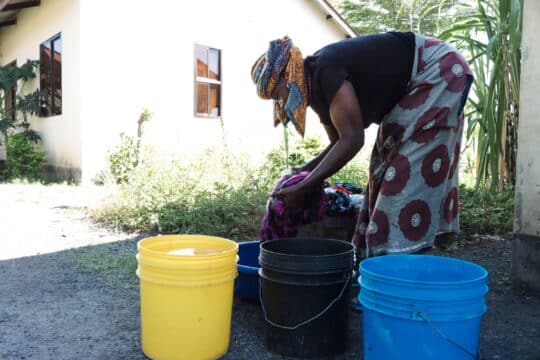
⬆️The guidance note draws on extensive research, community consultations and regional learning processes across the Great Lakes and Horn of Africa. Pictured is a woman from a Tanzanian community that was displaced from land later developed into a mining site.
Key insights
✔️ Mining expansion must be matched by stronger access to remedy – communities continue to face human rights and environmental harms without adequate pathways to justice.
✔️ Existing grievance mechanisms are failing affected communities – barriers such as low awareness, lack of trust, and inaccessible processes leave many grievances unresolved.
✔️ Community-driven grievance mechanisms are essential – remedy systems work best when shaped by the needs and priorities of affected communities.
✔️ Faith actors can play a unique role in improving access to remedy – their trusted position enables them to connect communities, companies, and authorities.
⬇️ Figure 1: The UNGPs and OECD Guidelines recognise that access to remedy depends on multiple pathways to justice. Companies, investors, buyers and other value chain actors can all contribute to remedy depending on their relationship to the harm.
⬆️The guidance note was officially launched and endorsed by faith actors in Arusha on 5 June. Here, Benjamin Claeson of Swedwatch is interviewed by Global TV about the barriers to justice faced by mining communities and shares his hopes for how the guidance will be used by communities and businesses going forward.


Short documentary