Towards increased transparency in the pharmaceutical supply chain
25 November 2021
Industrial emissions from manufacturing of medicines are often associated with environmental pollution, adversely impacting ecosystems and human health. However, opaque supply chains make it impossible to hold polluters to account. In a new policy paper, Swedwatch calls on EU policymakers to strengthen their oversight on industrial emissions in the pharmaceutical sector.
Pharmaceuticals are critical for securing the health and well-being of the global population. However, the manufacturing process is often associated with environmental pollution, negatively impacting ecosystems and posing threats to human health including the spread of multi-drug resistant pathogens.
Fundamental to mitigating these negative impacts is transparency; without access to information such as supplier lists or environmental risk assessments, it is impossible to hold polluters to account. However, the pharmaceutical supply chain remains vastly opaque, leaving consumers and other stakeholders with little knowledge of how medicines are produced, and at what cost.
Without access to information such as supplier lists or environmental risk assessments, it is impossible to hold polluters to account

While technological innovations to produce environmentally safe medicines are needed, experts point to the importance of increased visibility in the supply chain, disclosing information on suppliers and their specific location.
Environmental and public health organisations have long called on the European Union to align legislative measures to regulate industrial emissions from pharmaceutical manufacturing facilities. The last decade has also seen an increase in calls for transparency in the sector, as evidence of environmental pollution in the early stages of medicine production has continued to grow.
In this policy paper, Swedwatch calls for strengthened oversight to mitigate and control industrial emissions that occur during the production of medicines. It particularly calls on the EU to strengthen demands for transparency of information in the general pharmaceutical legislation, and through the implementation of the Pharmaceutical Strategy for Europe.

Pharmaceutical residue and other substances that are discharged from manufacturing facilities affect people’s basic access to clean water, food, and livelihoods. Long-term exposure to those substances also has adverse impacts on local community members’ health and wellbeing.
The recent documentary An Unequal Fight and a study carried out by the VIDHI Center for Legal Policy demonstrate that long-term industrial emissions from manufacturing facilities continue to adversely affect the lives of local communities.

Following the launch of the policy paper, Swedwatch and the Swedish National Agency for Public Procurement arranged a webinar to shed light on the problem of manufacturing pollution, and to address procurers’ role in pushing for transparency and access to information.
Related publications
The Health Paradox: Environmental and human rights impacts from pharmaceutical production in India (report, 2020)
Swedwatch calls for EU pharma strategy to protect rights and environment (article, 2020)
Highlighting the real cost of affordable medicine (article, 2020)
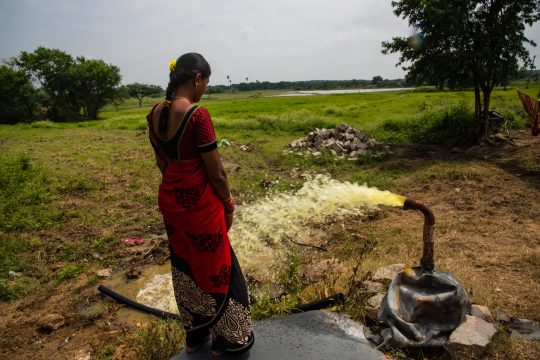
Contaminated ground water from a borewell in Gaddapotharam, India. Villagers have stopped using this water for agricultural irrigation due to dangerous levels of hexavalent chromium. Source: The Health Paradox. Photo: Shailendra Yashwant